Outsourcing product engineering can give a company access to specialized skills and additional development capacity without spending months building an entire team internally. But simply assigning a group of external developers to a backlog does not create an effective product-engineering pod.
The structure matters.
A successful outsourced product-engineering pod needs a clearly defined product area to own, the right combination of technical and product roles, enough autonomy to make day-to-day decisions, and an operating model that connects it closely with the internal team.
Instead of asking, “How many developers should we outsource?”, a better starting point is:
“What product outcome do we want this team to own?”
This guide walks through nine practical steps for structuring an outsourced product-engineering pod—from defining ownership and selecting roles to establishing engineering standards, communication rhythms, and meaningful performance metrics.
9 Steps to Build an Effective Outsourced Product-Engineering Pod
A practical outsourced pod structure can be summarized as:
Product Ownership → Team Composition → Responsibilities → Governance → Workflow → Quality → Communication → Product Context → Measurement
Each part supports the next. A technically strong team can still struggle if ownership is unclear. Likewise, clear product goals will not produce consistent results if engineers lack the processes, access, authority, or context needed to deliver them.
Here is how to put the complete structure together.
Step 1: Define What the Pod Will Own
Start with ownership—not headcount.
One of the easiest mistakes to make when outsourcing engineering is beginning with a staffing requirement:
“We need four developers and a QA engineer.”
That tells you how many people you want, but it does not tell those people what they are collectively accountable for.
Instead, establish a clear ownership boundary for the pod.
Depending on your product and organization, an outsourced product-engineering pod might own:
-
A complete product
-
A specific product module
-
A customer journey
-
A related group of features
-
A platform capability
-
A service or API
For example, imagine a SaaS company trying to improve customer activation.
Instead of asking an outsourced team to complete whatever onboarding tickets appear in the backlog, the company could define the pod's ownership as:
Registration → Account Setup → Product Onboarding → Activation
The pod now has a coherent area of responsibility.
Before assembling the team, document:
-
The business objective
-
Target users
-
Product scope
-
What falls inside the pod's ownership
-
What remains outside its ownership
-
Dependencies on other teams
-
Expected product outcomes
Clear boundaries also make technical decisions easier. Engineers know which systems they can modify, which teams they need to coordinate with, and where an issue needs to be escalated.
A good pod structure therefore begins with an outcome and ownership model, not a list of job titles.
Step 2: Choose the Right Pod Size and Team Composition
Once ownership is clear, determine which capabilities the pod needs to deliver against it.
There is no universal product pod structure that works for every organization. A straightforward web product might need several full-stack engineers and shared DevOps support, while a data-heavy platform could require backend, cloud, data, and security specialists.
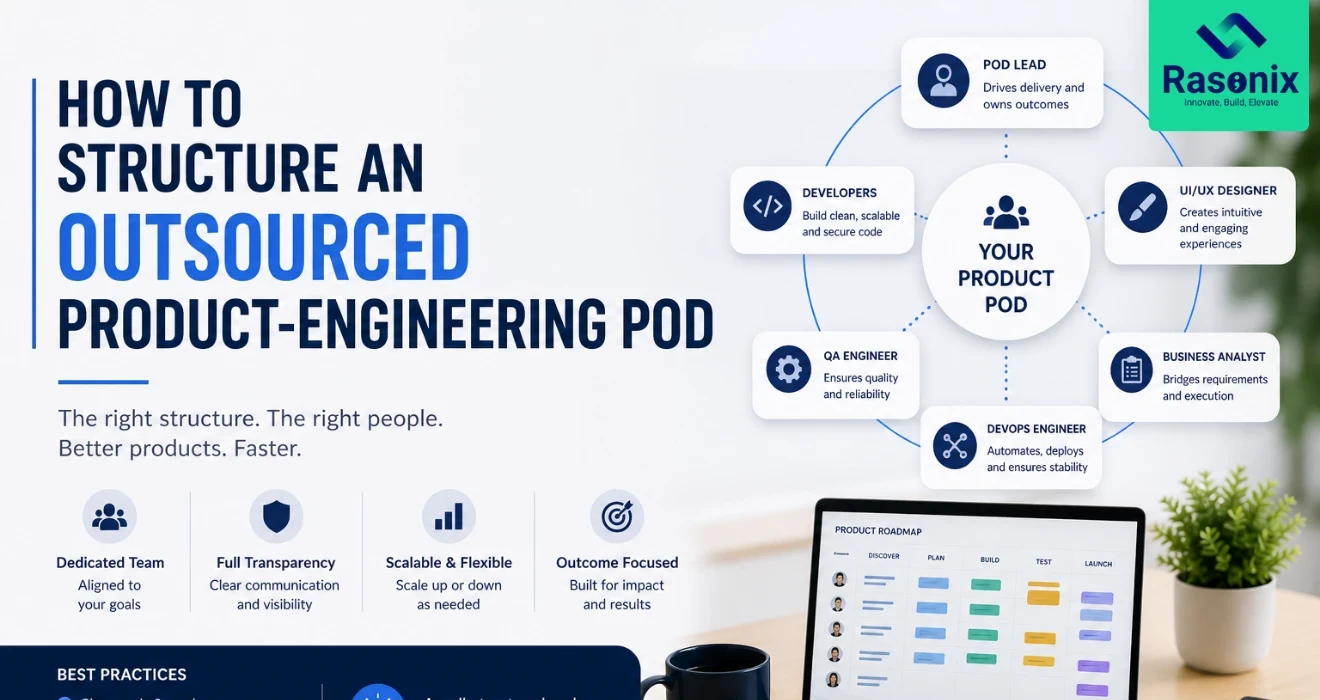
A typical outsourced product-engineering pod might look like this:
|
Role
|
Typical Allocation
|
Primary Responsibility
|
|
Product Owner / Product Manager
|
1
|
Priorities and product outcomes
|
|
Tech Lead / Senior Engineer
|
1
|
Architecture and technical leadership
|
|
Software Engineers
|
2–4
|
Product development
|
|
QA / Automation Engineer
|
1
|
Testing and quality
|
|
UX/UI Designer
|
Shared or dedicated
|
User experience and interface
|
|
DevOps / Cloud Engineer
|
Shared or dedicated
|
Infrastructure, deployment and CI/CD
|
A 5–8 person core pod can be a practical starting point, but team size should follow the work rather than become a fixed rule.
Product Owner / Product Manager
The Product Owner or Product Manager connects engineering work with business priorities.
Typical responsibilities include:
-
Defining product goals
-
Prioritizing the backlog
-
Writing or validating acceptance criteria
-
Clarifying customer needs
-
Coordinating stakeholders
-
Measuring product outcomes
For many outsourced pods, keeping this role inside the client organization works well because internal Product Managers often have deeper access to customers, commercial priorities, and company strategy.
The outsourced team can still provide product-management support, but someone needs clear final ownership of priorities.
Tech Lead / Senior Engineer
The Tech Lead provides technical direction to the pod.
Responsibilities can include:
-
Architecture decisions
-
Technical planning
-
Code reviews
-
Engineering standards
-
Technical risk management
-
Mentoring engineers
-
Coordinating with internal architecture teams
This role is particularly important in an outsourced model because the Tech Lead becomes one of the primary bridges between the external engineers and the client's broader technical organization.
Software Engineers
The engineering mix depends on the product.
A pod might contain:
-
Frontend engineers
-
Backend engineers
-
Full-stack engineers
-
Mobile developers
Avoid choosing the mix simply because particular resources are available. Map the skills to the systems the pod actually owns.
QA / Automation Engineer
Quality assurance should be part of the pod rather than something that happens after development is “finished.”
The QA or automation engineer can own:
-
Test planning
-
Automated testing
-
Regression testing
-
Release validation
-
Defect analysis
-
Quality gates
This creates shared accountability for delivering working software instead of separating “development” and “testing” into isolated phases.
Shared or Part-Time Specialists
Not every specialist needs to be permanently embedded.
Depending on the product, the pod can draw on fractional or shared expertise from:
-
UX/UI designers
-
DevOps or SRE engineers
-
Solution architects
-
Security engineers
-
Data engineers
-
AI/ML engineers
This keeps the core team focused while giving it access to specialized capabilities when necessary.
Step 3: Define Internal vs Outsourced Responsibilities
The next question is not just who is on the pod, but who owns each type of decision.
Outsourcing product engineering does not require transferring every product and technology decision to an external team.
A practical division might look like this:
|
Responsibility
|
Internal Team
|
Outsourced Pod
|
Shared
|
|
Product vision
|
✓
|
|
|
|
Business priorities
|
✓
|
|
|
|
Backlog refinement
|
|
|
✓
|
|
Architecture
|
|
|
✓
|
|
Development
|
|
✓
|
|
|
Testing
|
|
✓
|
|
|
Production releases
|
|
|
✓
|
|
Security standards
|
✓
|
|
✓
|
|
Product performance
|
|
|
✓
|
The exact split will differ between organizations.
For example, the client may define enterprise-wide security standards while the pod is responsible for implementing those standards in the software it owns.
Similarly, an internal Product Manager might decide what problem should be solved, while the pod determines how it should be engineered.
The important principle is:
Outsourcing delivery does not mean outsourcing product accountability.
Both sides should know where internal authority ends, where pod autonomy begins, and where collaboration is required.
Step 4: Create a Pod Charter and Decision Framework
Once responsibilities are clear, document them.
A lightweight pod charter prevents the operating model from existing only in meeting conversations or people's assumptions.
The charter should define:
-
Pod mission
-
Product or platform ownership
-
Business goals
-
Scope
-
Out-of-scope areas
-
Key performance indicators
-
Dependencies
-
Communication expectations
-
Decision rights
-
Escalation paths
It does not need to become a large governance document. The goal is to give everyone a shared understanding of how the pod works.
Define Decision-Making Authority
An autonomous engineering pod does not mean an engineering pod with unlimited authority.
Teams need to know:
-
Which technical decisions can they make independently?
-
When does the Product Owner need to approve a change?
-
Who approves major architectural decisions?
-
Who can authorize a production release?
-
Who handles security exceptions?
-
Who resolves conflicting priorities?
A lightweight RACI or DACI model can help when responsibilities cross several internal and outsourced teams.
The objective is to remove unnecessary approval bottlenecks without losing appropriate technical or business oversight.
Step 5: Integrate the Pod Into Your Existing Engineering Workflow
An outsourced pod should not feel like a separate company waiting outside your engineering process for instructions.
Where security and operational requirements permit, integrate the team into the same environment used by internal engineers.
That can include:
-
Jira, Linear, or Azure DevOps
-
GitHub, GitLab, or Bitbucket
-
Slack or Microsoft Teams
-
Figma
-
Internal documentation
-
CI/CD pipelines
-
Cloud environments
-
Monitoring platforms
-
Product analytics tools
The pod should have the access required to understand work, contribute code, review changes, test releases, investigate issues, and collaborate with other teams.
This is also where access control needs to be intentional. Provide enough access for the team to perform its responsibilities while following least-privilege and security requirements.
Avoid creating a parallel “vendor process” unless there is a genuine compliance or security reason.
For example:
Internal workflow: Jira → GitHub → CI/CD → staging → production
Vendor workflow: Email → vendor project manager → separate task system → developer → ZIP/code handoff → internal review
The second model introduces unnecessary handoffs and makes genuine product ownership difficult.
The closer the pod is to the real engineering workflow, the easier it becomes to operate as an extension of the product team.
Step 6: Establish Engineering and Quality Standards
Autonomy works best when the boundaries of good engineering are already understood.
Before the outsourced pod begins independent delivery, establish expectations for:
-
Coding standards
-
Branching strategy
-
Pull requests
-
Code review
-
Definition of Ready
-
Definition of Done
-
Testing
-
Documentation
-
Security
-
Deployment
-
Monitoring and observability
These standards should align with the rest of the engineering organization whenever possible.
Build Quality Into the Delivery Process
Do not structure the pod so developers build first and QA becomes the final gate.
Quality should be incorporated throughout delivery through practices such as:
-
Unit testing
-
Integration testing
-
Automated regression testing
-
Static code analysis
-
Peer code review
-
Security scanning
-
Performance testing
-
CI/CD quality gates
The objective is not simply to ship features faster. It is to create a pod capable of shipping reliable software repeatedly.
That distinction becomes especially important when the pod owns a product area over the long term.
Step 7: Establish the Pod's Operating and Communication Rhythm
Outsourced pods need structured communication, but they do not need constant meetings.
A practical operating cadence could look like this:
Daily
-
Short stand-up or asynchronous update
-
Blocker identification and resolution
Weekly
-
Backlog refinement
-
Product and engineering alignment
Every Sprint
-
Sprint planning
-
Product demo/review
-
Retrospective
Monthly
-
Product and engineering performance review
Quarterly
-
Roadmap, priorities, and capacity review
The goal is to create enough communication for alignment without turning the internal team into full-time coordinators for the outsourced pod.
For offshore or distributed product-engineering pods, also establish:
-
Required working-hour overlap
-
Expected response times
-
Async communication rules
-
Escalation channels
-
Decision logs
-
Documentation expectations
Important decisions should not disappear into private calls or chat threads. Architecture decisions, changes in product scope, and major technical trade-offs should be documented so both teams can refer back to them.
This becomes increasingly important as the pod grows or operates across time zones.
Step 8: Onboard the Pod Into the Product, Not Just the Codebase
Giving engineers repository credentials is not product onboarding.
If you expect an outsourced pod to make good decisions, its members need to understand the context behind the software they are building.
Onboarding should cover:
-
Product vision
-
Customer personas
-
Customer problems
-
Important user journeys
-
Business model
-
Product roadmap
-
Existing architecture
-
Codebase structure
-
Technical debt
-
Engineering conventions
-
Previous architectural decisions
-
Security and compliance requirements
For example, an engineer working on checkout should understand why customers abandon checkout—not just which API endpoint processes the transaction.
That context helps engineers challenge assumptions, identify edge cases, and suggest better solutions.
Example 30-Day Pod Onboarding Plan
Week 1: Product Context
Introduce the business, customers, product goals, user journeys, roadmap, and success metrics.
Week 2: Technical Context
Walk through architecture, repositories, environments, deployment processes, documentation, and engineering standards.
Week 3: Controlled Delivery
Assign a meaningful but manageable piece of work that takes the team through the complete development and release process.
Week 4: Independent Ownership
Move toward independent feature or sprint ownership while reviewing gaps in access, knowledge, and processes.
The objective is not to make the team fully autonomous by an arbitrary date. It is to progressively increase autonomy as product and technical understanding grows.
Step 9: Define How Pod Performance Will Be Measured
An outsourced pod should not be evaluated primarily by how many hours its developers worked.
Likewise, commits, tickets, and story points provide limited insight when viewed alone.
Measure performance across delivery, quality, and product outcomes.
Delivery Metrics
Useful measures can include:
-
Lead time for changes
-
Cycle time
-
Deployment frequency
-
Throughput
-
Delivery predictability
These indicate how efficiently work moves from an idea or requirement into production.
Quality Metrics
Track indicators such as:
-
Escaped defects
-
Change failure rate
-
Production incidents
-
Mean time to recovery
-
Automated test coverage
These help prevent faster delivery from hiding declining software quality.
Product Metrics
The most meaningful metrics depend on what the pod owns.
For a customer-onboarding pod, for example, metrics could include:
-
Onboarding completion
-
Time to first value
-
Activation rate
-
Conversion
-
Feature adoption
A retention-focused pod would need different measures.
This is why Step 1 - defining ownership - is so important. Once the team owns a meaningful product area, engineering performance can be connected to actual product results.
What Does a Well-Structured Outsourced Engineering Pod Look Like?
Consider a SaaS company that wants to improve customer onboarding.
Instead of adding developers to a general engineering pool, it creates an outsourced product-engineering pod around one customer journey.
Example: SaaS Customer-Onboarding Pod
Business objective:
Improve the journey from account registration to successful product activation.
Pod ownership:
Registration → Account Setup → Onboarding → Activation
Team composition:
-
1 internal Product Manager
-
1 outsourced Tech Lead
-
2 full-stack engineers
-
1 frontend engineer
-
1 QA automation engineer
-
Fractional UX support
-
Fractional DevOps support
The internal Product Manager owns customer priorities and business outcomes. The Tech Lead and engineering team have authority over day-to-day implementation within established architecture and security standards.
The team works directly in the company's repositories and product-management tools.
Its operating model could include two-week planning cycles, continuous integration and deployment, weekly product demonstrations, and regular retrospectives.
Rather than measuring success by development hours alone, the organization tracks:
-
Cycle time
-
Deployment frequency
-
Production defects
-
Onboarding completion
-
Activation rate
This is what distinguishes a structured pod from a collection of outsourced resources: the people, ownership, processes, and measurements all point toward the same product outcome.
Common Mistakes When Structuring an Outsourced Engineering Pod
Even a highly experienced engineering team can underperform when the surrounding structure is wrong.
Here are some of the most common mistakes to avoid.
Starting With Headcount Instead of Product Ownership
“We need five developers” is a staffing requirement, not a product strategy.
Determine what the team needs to own first. Then build the pod around the capabilities required to deliver that outcome.
Treating the Pod Like a Ticket Factory
If engineers receive isolated tickets without understanding customers, goals, or priorities, they can only optimize for completing tasks.
Give the pod enough product context to understand the problems behind the backlog.
Creating Too Many Approval Layers
A pod cannot operate autonomously if every implementation detail requires several internal approvals.
Define decision boundaries clearly so routine technical decisions can remain within the pod while strategic or high-risk decisions receive appropriate oversight.
Running Separate Vendor Workflows
Separate project-management systems, repositories, communication channels, and release processes create handoffs.
Integrate the outsourced pod with the internal workflow wherever security and compliance requirements allow.
Keeping Critical Technical Knowledge In-House
Protecting institutional knowledge by withholding it from an outsourced team can have the opposite effect: engineers make decisions without enough context.
Share the architecture, constraints, technical history, and standards the pod needs to own its area responsibly.
Underinvesting in QA and DevOps
A team that can write features but depends entirely on another team to test or deploy every change does not have true end-to-end delivery capability.
Build sufficient quality and delivery capabilities into the pod or make shared specialist support readily accessible.
Measuring Activity Instead of Outcomes
Developer utilization, hours, commits, and story points may help with operational planning, but they should not become the definition of success.
Measure whether the pod delivers valuable software predictably, maintains quality, and improves the product outcomes it owns.
Product Engineering Pod vs Traditional Outsourcing
An outsourced product-engineering pod and traditional software outsourcing can both involve external engineering talent, but the operating models are different.
|
Area
|
Traditional Outsourcing
|
Product-Engineering Pod
|
|
Primary focus
|
Tasks or resources
|
Product outcomes
|
|
Ownership
|
Limited
|
Defined product area
|
|
Structure
|
Resource/role based
|
Cross-functional
|
|
Product context
|
Often limited
|
High
|
|
Autonomy
|
Usually lower
|
Medium to high
|
|
Client relationship
|
Task/project management
|
Continuous collaboration
|
|
Measurement
|
Output/hours
|
Delivery, quality and outcomes
|
The simplest distinction is:
Traditional outsourcing asks: “What work should the vendor complete?”
A product-engineering pod asks: “What product outcome should this team own?”
That shift affects how the team is staffed, managed, integrated, and measured.
Product Pod vs Agile Squad: What's the Difference?
Product pods and Agile squads are closely related concepts, and companies often use the terminology differently.
Both generally describe a relatively small, cross-functional team that brings together the skills required to deliver against a defined objective.
An Agile squad is commonly associated with Agile organizational structures and typically owns a product area or mission.
A product-engineering pod similarly emphasizes cross-functional ownership, but the term is also frequently used when discussing dedicated or outsourced engineering teams.
So, when comparing pods vs squads, focus less on the label and more on questions such as:
-
What does the team own?
-
Which skills are inside the team?
-
How independently can it operate?
-
How are decisions made?
-
How is success measured?
Two organizations can use different names while operating almost identical team structures.
How to Choose an Outsourced Product-Engineering Pod Partner
A good pod structure depends partly on whether the engineering partner can actually operate within it.
Do not evaluate potential partners only on the number of developers they can provide or their hourly rates.
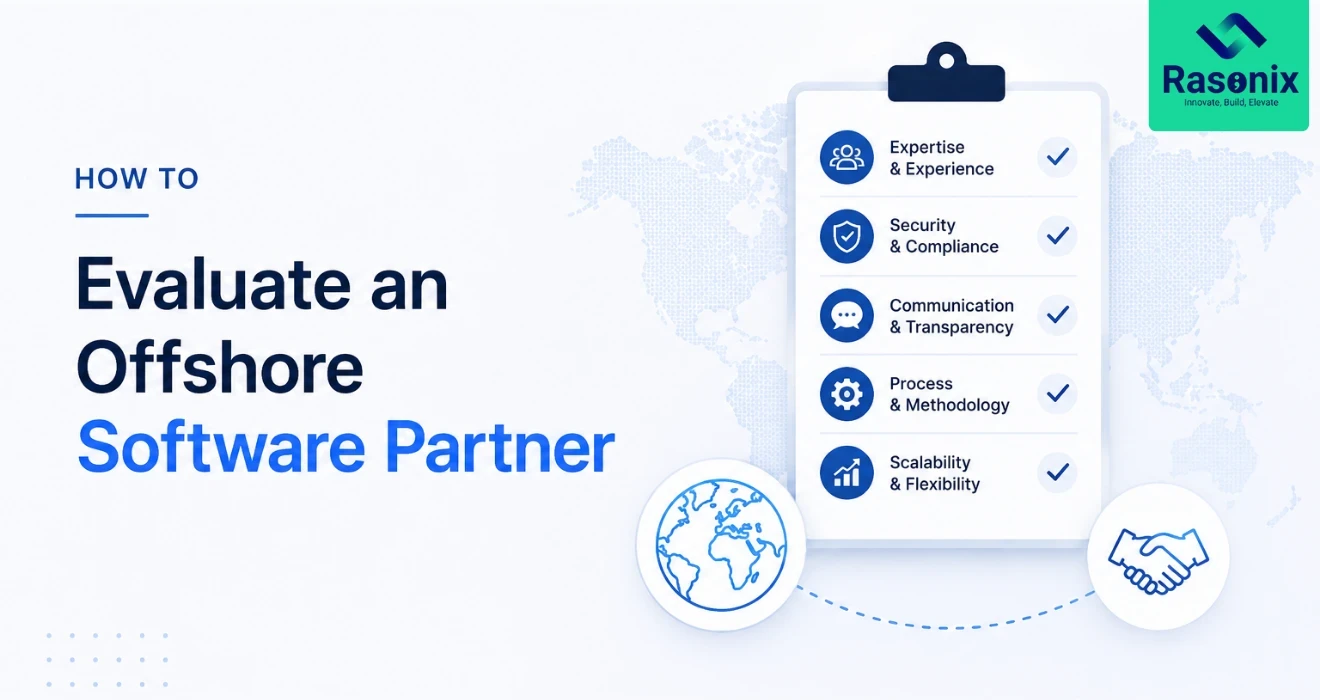
Assess areas such as:
-
Product-engineering experience
-
Technical leadership
-
Ability to assemble balanced pods
-
Engineering standards
-
QA automation maturity
-
DevOps capabilities
-
Security practices
-
Communication processes
-
Team stability
-
Knowledge-transfer practices
-
Scaling flexibility
-
IP and source-code ownership
Questions to Ask a Potential Pod Partner
Before committing to an outsourced product-engineering pod, ask:
-
Who will technically lead the pod?
-
How do you determine the right team composition?
-
Can your engineers work directly within our repositories and existing toolchain?
-
How will architecture decisions be made and documented?
-
How do you measure and maintain engineering quality?
-
What happens if a key pod member leaves or needs to be replaced?
-
How do you document and transfer product and technical knowledge?
-
How will your engineers work with our Product Manager and internal teams?
-
Who owns the source code, documentation, and intellectual property?
-
How can the pod scale up or down as our roadmap changes?
The answers should show whether the provider can create an integrated product team rather than simply supply individual developers.
Outsourced Product-Engineering Pod Structure Checklist
Before launching your pod, confirm that:
-
The business and product outcome is defined
-
The pod has a clear ownership boundary
-
A Product Owner or Product Manager is identified
-
A technical lead is assigned
-
Engineering roles match the product scope
-
Internal and outsourced responsibilities are documented
-
Decision-making authority is clear
-
A pod charter exists
-
Repository and engineering-tool access is ready
-
Development environments are configured
-
Engineering standards are agreed
-
QA and testing processes are established
-
CI/CD workflows are ready
-
Security requirements are documented
-
Communication and escalation processes are defined
-
Delivery, quality, and product KPIs are established
-
Product and technical onboarding is planned
If several of these remain unclear, adding more engineers is unlikely to solve the underlying delivery problem.
Final Takeaway
The most effective outsourced product-engineering pods are not structured around available developers. They are structured around clear product ownership.
A practical sequence is:
Product Ownership → Team Composition → Responsibilities → Governance → Workflow → Quality → Communication → Product Context → Measurement
Give the pod a meaningful outcome to own, assemble the capabilities needed to deliver it, define where decisions sit, integrate the team into your engineering environment, and measure success against delivery, quality, and product results.
When those elements work together, an outsourced pod can operate less like an external development queue and more like an integrated extension of the product-engineering organization.
Frequently Asked Questions About Product-Engineering Pods
What Is Pod Structure?
A pod structure organizes a small, cross-functional group around a defined product, feature area, customer journey, or business outcome. A product-engineering pod typically combines product leadership, technical leadership, software development, and quality engineering, with specialists such as UX or DevOps added when needed.
Is Outsourcing a Dying Concept?
Outsourcing is evolving rather than simply disappearing. Traditional models based primarily on transferring predefined tasks can be less suitable for continuous product development. Modern approaches such as dedicated teams and product-engineering pods instead emphasize closer collaboration, specialized expertise, product context, and shared accountability for delivery outcomes.
What Is the Typical Structure of an Agile POD Team?
A typical Agile pod includes a Product Owner or Product Manager, a Tech Lead, several software engineers, and QA expertise. UX/UI, DevOps, data, security, or other specialists may be dedicated or shared depending on the product. The exact structure should reflect the capabilities required to own and deliver a defined outcome.
What Is a Pod in Engineering?
An engineering pod is a small, cross-functional team responsible for a clearly defined area of software or product delivery. Rather than organizing people only by technical discipline, a pod brings complementary roles together so the team can build, test, release, and improve a product area with relatively high ownership and autonomy.




 Subscribe Now