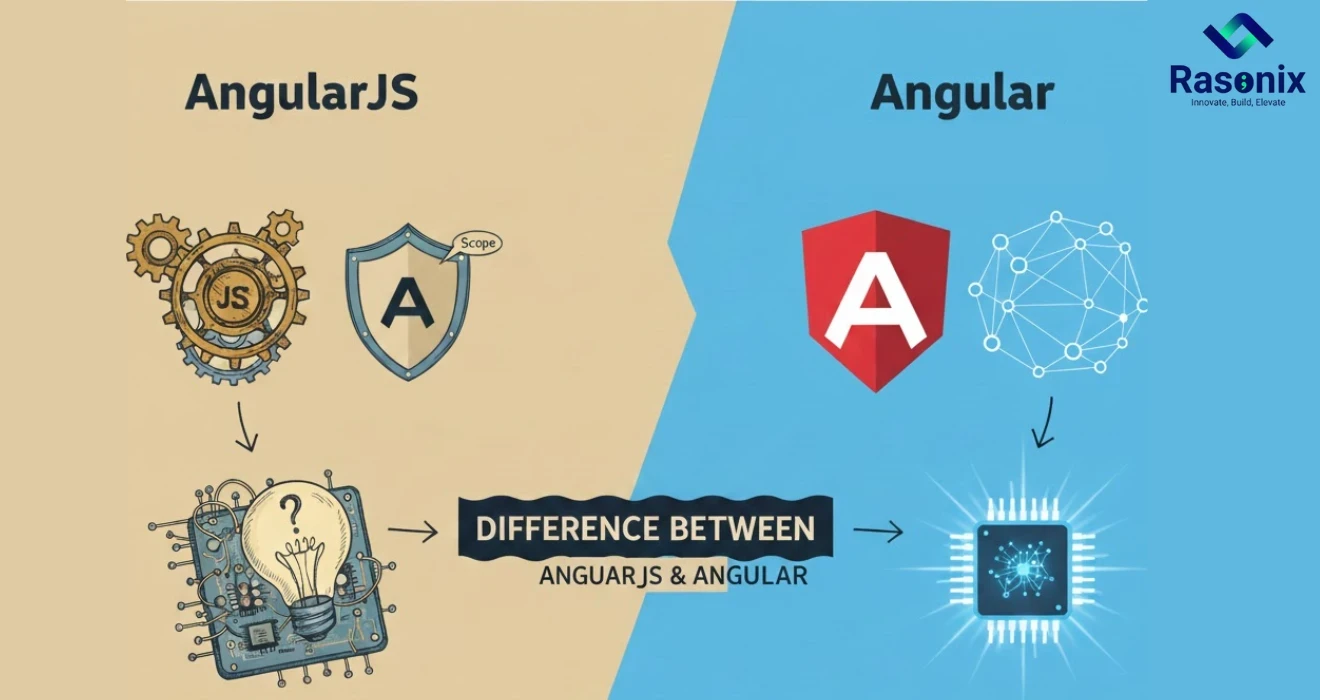
If you’ve ever asked yourself, “What’s the difference between Angular and AngularJS?” you’re in good company. This is a very common question among both novice developers, and recruiters, as well as with experienced front-end developers tackling legacy code. The confusion is understandable: both were developed by Google, both existed in the space of building dynamic web applications, and most people just refer to both simply as Angular.
But there is a difference, Angular and AngularJS are not the same thing. They differ greatly in terms of language, architecture, performance, and use cases. This blog post is your one-stop shop to break down the differences between Angular and AngularJS. Whether you are a novice developer considering the right framework or technology for your project, or you’re a tech decision-maker asking if you should upgrade, we will approach the nuances from every perspective: background, technical differences, use cases, and even interview questions. By the end of this post, you will be able to easily explain the difference between Angular and AngularJS, and why this difference is important today more than ever.
Also, take a look at: Free Broken Link Checker 2025 | Reviewed & Recommended
Difference Between Angular and AngularJS
|
Aspect
|
AngularJS
|
Angular (Angular 2+)
|
|
Developed by
|
Google
|
Google
|
|
Initial Release
|
2010
|
2016
|
|
What is it?
|
First version of the Angular framework
|
A complete rewrite of AngularJS using moderate TypeScript
|
|
Language
|
JavaScript
|
TypeScript
|
|
Architecture
|
MVC (Model-View-Controller)
|
Component-based architecture
|
|
Data Binding
|
Two-way (automatic sync via ng-model)
|
Unidirectional (property + event binding)
|
|
DOM Manipulation
|
Real DOM (manipulates directly)
|
Virtual DOM-like rendering strategies
|
|
Tooling Support
|
No CLI
|
Angular CLI for scaffolding, testing, building
|
|
Mobile Support
|
No native support
|
Strong native & cross-platform support via Iconic/NativeScript
|
|
Routing
|
$routeProvider
|
@angular/router (RouterModule)
|
|
Dependency Injection
|
Simple DI
|
Hierarchical and advanced DI
|
|
Component Style
|
Controllers, scopes, directives
|
Components, services, modules
|
|
Templating Syntax
|
HTML + AngularJS expressions ( {{ }} )
|
HTML + Angular syntax with *ngIf, [(ngModel)], @Input()
|
|
Performance
|
Slower due to digest cycle
|
Faster due to Ahead-of-time compilation, tree shaking, lazy loading
|
|
Browser Support
|
Works on older browser
|
Modern browsers only (ES6+)
|
|
SEO Capabilities
|
Limited
|
Better with Angular Universal (Server-Side Rendering)
|
|
Learning Curve
|
Easier for those familiar with JavaScript
|
Steeper due to TypeScript, RxJS, and CLI
|
|
Use Cases
|
SPAs, internal dashboards. Legacy projects
|
Enterprise apps, PWAs, complex frontends, mobile apps
|
|
Community Support
|
Declining (official support ended in 2021)
|
Active, growing community with regular Google updates
|
|
Current Status
|
Deprecated (EOL as of Dec 2021)
|
Actively maintained (Latest version Angular 20+)
|
|
Scalability
|
Limited for large gaps
|
Highly scalable
|
|
Error Handling
|
Minimal, via JavaScript
|
Strong, with TypeScript type-checking & RxJS error streams
|
|
Testing Support
|
Basic testing with Jasmine/Karma
|
Strong tooling with TestBed, Jasmine, Protractor, Jest
|
|
Upgrade Path
|
No direct upgrade to Angular
|
Clear versioning and upgrade strategies (via ng update)
|
|
Migration Tools
|
Manual or via ngUpgrade (temporary hybrid strategy)
|
Migration-friendly with community support
|
|
Bundling & Optimization
|
Manual/minimal
|
Tree shaking, lazy loading, AOT for optimized builds
|
|
Package Size
|
Larger due to bloated digest cycle
|
Smaller & optimized through CLI tools
|
|
CLI Support
|
Not available
|
Built-in CLI for scaffolding, linting, testing, and deployment
|
|
Flexibility
|
More flexibility in syntax but less structured
|
Opinionated but more maintainable
|
|
State Management
|
Manual
|
MgRx, Akita, or built-in solutions via services
|
AngularJS vs Angular: Which One Should You Use?
|
Scenario
|
Best Fit
|
|
Building new, modern web apps
|
Angular (2+)
|
|
Large enterprise-scale frontends
|
Angular (2+)
|
|
Mobile or cross-platform projects
|
Angular (2+) + Ionic
|
|
Maintaining an existing legacy app
|
AngularJS
|
|
Temporary learning/training apps
|
AngularJS (for fast JS prototyping only)
|
Angular vs React (Quick Table)
|
Feature
|
Angular (2+)
|
React
|
|
Type
|
Full-fledged Framework
|
UI Library
|
|
Language
|
TypeScript
|
JavaScript with JSX
|
|
Architecture
|
Component-based + full toolchain
|
Component-based (UI only)
|
|
Data Binding
|
Unidirectional (Property + Event)
|
Unidirectional
|
|
Routing
|
Built-in (@angular/router)
|
Via external libraries (e.g., React Router)
|
|
State Management
|
NgRx, services
|
Redux, Zustand, or Context API
|
|
Learning Curve
|
Steep
|
Moderate
|
|
Use Case
|
Enterprise apps, PWAs, mobile apps
|
SPAs, dynamic UIs, real-time dashboards
|
Internship Opportunity at Rasonix:

Are you searching to gain experience on hands with real -world friend development?
This is what the angular and angularjs internship in Rasonix provides this. As an intern, you will work directly on enterprise-level projects that use both Angularj (Legacy) and Modern Angular (2+) framework. Directed by experienced masters, this is the right opportunity to specialize in both technologies. To contribute from Mastering Framework Fundamental to Production-Reddy Code, this internship equips you with practical skills that separates you in the job market.
Conclusion:
The difference between Angular and AngularJS is just beyond the version numbers. This represents an entire innings of how modern web applications are made - from the language used (JavaScript vs Typscript) to the underlying architecture and development equipment. AngularJS serves as an important basis, but it is angular that addresses the requirement of necessary complexity, measurement and maintenance in today's applications. If you are starting a new project, it is important to know the difference between Angular and AngularJS.
Need help? Partner with Rasonix
In Rasonix, we help businesses unlock the full potential of modern front framework. Whether you want to manufacture scalable web apps using the latest Angular versions or are planning a smooth migration from AngularJS, our expert team has covered you. We specialize in angular performance optimization-reducing the dandling size, improving speed, and increasing accountability-and offering counseling services to help you hire skilled angular developers, either based on the project or for full-time roles. From development to deployment, Rasonix ensures that your application is designed for success. Contact us today to build, migrate, or score your next angular application with confidence.





 Subscribe Now